Chapter 02 · Homeowner's Guide
Do I need a structural beam
for my wall removal?
When a wall has to go, something needs to take its place, a properly sized, stamped beam. Here's when you need one, how it's sized, and what people get wrong.
Why Beams Matter
A wall doesn't just disappear.
Thinking about removing a wall, or modifying a basement wall for a walkout? The loads that wall was carrying, your roof, your floors, the snow on top, still need somewhere to go. A properly engineered beam is what bridges that gap, and it's essential to the structural integrity of your house.
The Fundamentals
When you need a beam, and how it's sized.
Situations that call for a new beam
- Load-bearing wall removal
- Open-concept renovations
- Supporting floors or roof above
- Walkout basement additions
- Replacing existing undersized beams
Three factors that determine beam size
- Span length, longer spans require larger beams
- Loads transferred, roof, snow, floors above
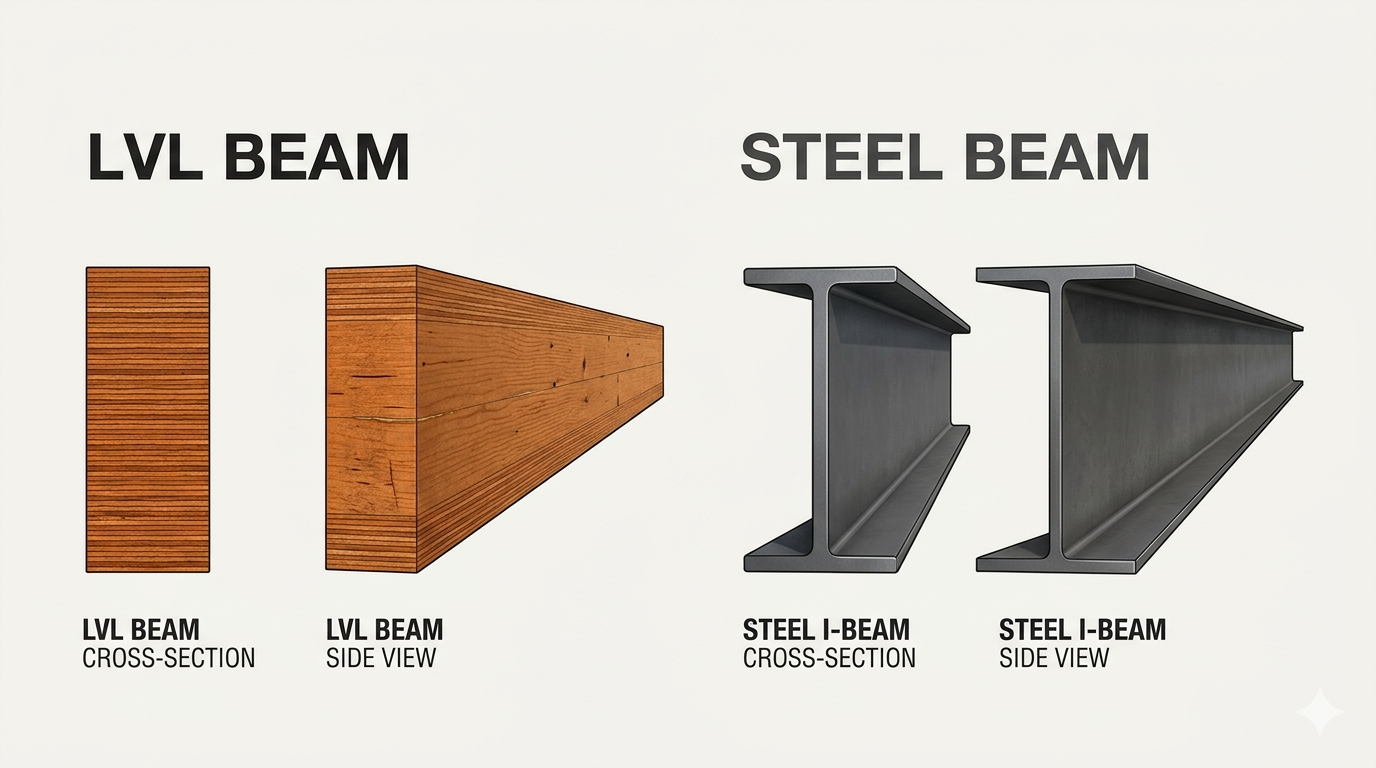
- Material type, LVL, steel, or timber, each behaves differently
A note from the engineer:
Signs people get it wrong
- Undersized beams, sagging ceilings show up months later
- No posts under the beam, the load has nowhere to go
- Guessing from a similar reno, structural design is not guesswork
Beam Types
LVL, steel, or engineered timber.