Chapter 01 · Homeowner's Guide
How to tell if a wall is load-bearing
(before you demo).
A practical walkthrough for Calgary homeowners thinking about taking down a wall, what to check, what to watch for, and when to bring in a structural engineer.
Before You Swing the Hammer
A two-minute load-bearing wall check.
Taking down a wall is one of the most common home-renovation moves in Calgary, and one of the most commonly botched. That wall might be holding up your roof, your second floor, or your kids' bedroom above. Here's how to spot the warning signs before the drywall comes off.
Four Things to Check
Steps to identify a load-bearing wall.
-
i. Check joist direction
Are joists running perpendicular?
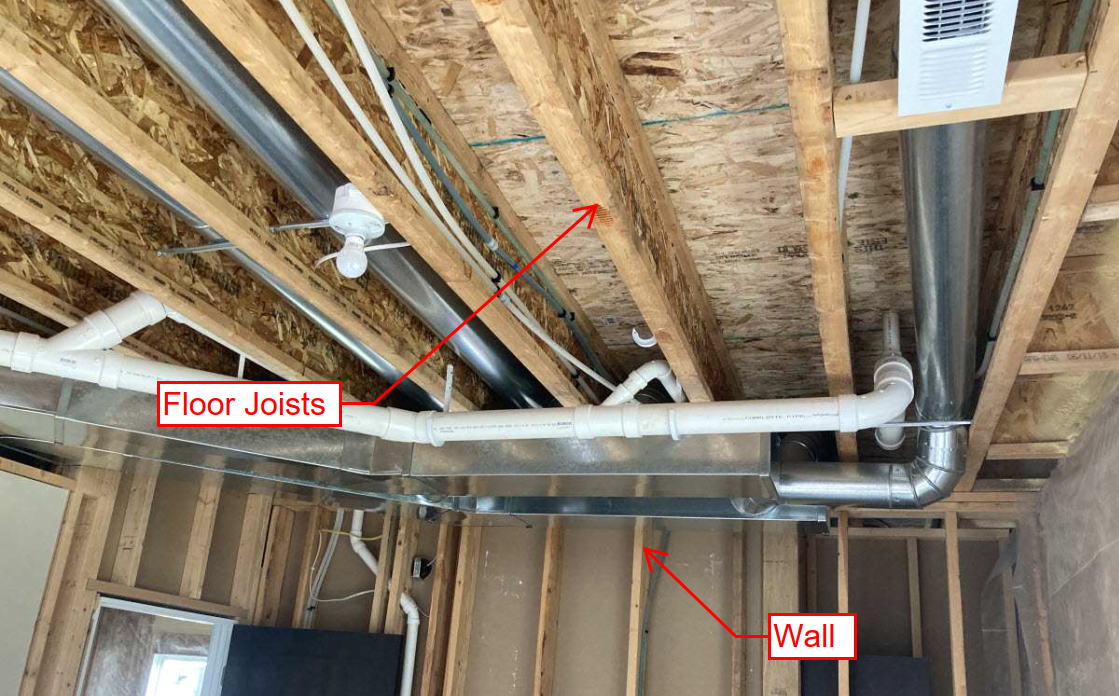
If floor or roof joists run perpendicular to the wall, there's a good chance it's carrying load. Joists that run parallel to a wall are usually being supported elsewhere.
-
ii. Walls above
Is another wall stacked above?
If there's another wall directly above the one you're considering, especially on a second floor, loads are likely transferring down through it.
-
iii. Structure below
Is there a post or beam underneath?
In basements, you'll often see beams or posts directly under load-bearing walls. If a basement post or steel beam lines up with your wall, that's a strong indicator.
-
iv. Centre of house
Where is the wall in the floor plan?
Exterior walls are almost always structural. Interior walls near the middle of the floor plan often are too, they're carrying the spans the exterior walls can't.
Why guessing is expensive
Not every wall is load-bearing, but guessing can lead to undersized beams, sagging ceilings, failed inspections, or permit revisions. Most homeowners call us after demolition starts and the joist direction surprises them. It's almost always easier (and cheaper) to confirm before.
Visual Example
A classic perpendicular joist layout.